
People often ask us which one to try first. The honest answer: they do completely different things. Choosing between a sound bath and a drum circle is like choosing between yoga and dancing. Both are good for you, but the experience - and what you get from it - is entirely different.
The short version
Sound bath: You lie down, close your eyes, and receive. It's passive. The practitioner plays therapeutic instruments and you absorb the sound. Think deep rest, nervous system reset, and mental stillness.
Drum circle: You sit up, pick up a drum, and play. It's active. Everyone creates rhythm together - no experience needed. Think energy, connection, laughter, and grounded joy.
What a sound bath feels like
Imagine lying in a warm room with your eyes closed. The lights are low. Slowly, the sound of a gong builds around you - not loud, but immersive. You feel the vibration in your chest as much as you hear it. Your breathing slows without you deciding to slow it. Your thoughts get quieter.
After 60 minutes, you sit up feeling like you've slept for three hours. That's the vagus nerve doing its job - shifting your nervous system from sympathetic (fight-or-flight) to parasympathetic (rest-and-restore).
Sound baths are ideal for people who are stressed, overtired, overstimulated, or carrying tension. If your default state is "wired", a sound bath is medicine.
What a drum circle feels like
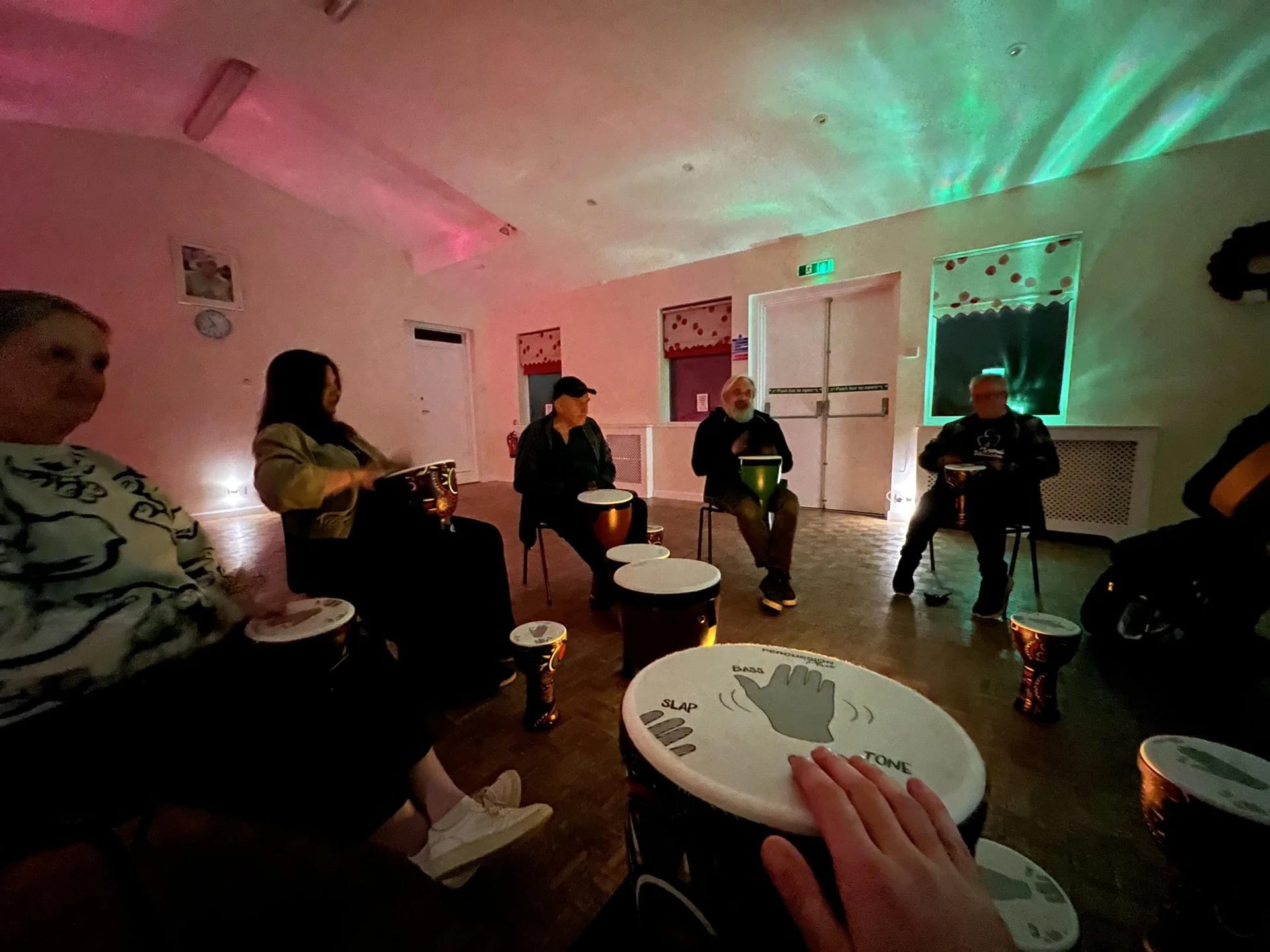
You walk in and there's a circle of chairs, each with a djembe drum. No sheet music, no instruction manual. The facilitator starts a simple rhythm and everyone joins in - building it up, playing together, sometimes breaking into laughter when it falls apart.
Within ten minutes, something shifts. The room is locked into a groove. You stop thinking about what your hands are doing and just play. This is rhythmic entrainment - your brain synchronises with the group pulse. Cortisol drops. Endorphins rise. Social bonding hormones kick in.
Drum circles are ideal for people who are isolated, low in energy, stuck in their head, or craving connection. If you spend most of your time sitting at a desk or caring for others, a drum circle gets you out of your mind and into your body.
Side by side
| Sound Bath | Drum Circle | |
| You are | Lying down, eyes closed | Sitting up, playing a drum |
| Energy | Deeply calming | Uplifting and energising |
| Social | Private (everyone's in their own world) | Connected (you're making music together) |
| Best for | Stress, anxiety, sleep, tension | Low mood, isolation, low energy |
| Experience needed | None | None |
| Duration | 60-75 minutes | 50-60 minutes |
| Afterwards | Floaty, rested, quiet | Buzzing, grounded, smiling |
Can you do both?
Absolutely. Many of our regulars attend both. They come to a sound bath when they need to decompress and a drum circle when they need a lift. They serve different purposes, and your body usually knows which one it needs.
If you've never tried either, we'd suggest starting with whichever description resonated more when you read it. There's no wrong answer.
Where to find both in Kent
We run regular sound baths and drum circles at venues across the Maidstone and Dartford area. Sound baths typically run in the evening (7pm start), drum circles slightly earlier. Both are open to complete beginners - no booking conditions beyond choosing your ticket.
Check our events page for the full schedule. If you're local to Kent and curious about group sound therapy, there's something running most weeks.